Andy Duckham
Performance Coach, United Kingdom
Learn a structured system for assessing client needs, selecting appropriate interventions, and progressively developing restoration, regulation and resilience.
Practitioner perspectives
Different professional backgrounds, but a shared emphasis on understanding the science, applying it in practice and developing greater confidence in professional decision-making.
Performance Coach, United Kingdom
Exercise Physiologist, Australia
Researcher and Breathwork Facilitator, Saudi Arabia
Professional education across disciplines. Hear how practitioners from performance, physiology and health have integrated School of Breath Science education into their existing work.
Is BRIT right for you?
BRIT is an applied training for people who already work with, or intend to work with, others across health, therapy, coaching, wellbeing, recovery and performance.
You do not need to be an experienced breathwork practitioner. You do need to be willing to think critically, practise the material and develop your professional judgement.
A structured learning pathway designed to help you understand the system, practise the skills and develop the judgement to apply them responsibly with real people.
The learning process
Work through structured online education before each live session, building the knowledge behind assessment, intervention selection and progression.
Use seven live integration sessions to turn knowledge into practical skill, reasoning and confidence.
Continue developing after the 12-week core training through six months of practitioner development and ongoing application.
The 3R client pathway
Learn to meet clients at their current capacity, establish the right foundations and progressively introduce greater challenge as their ability to adapt and recover develops.
1. Assess baseline and context
Understand current breathing patterns, stress load, capacity, goals and relevant client context before deciding where to begin.
2. Establish safety and awareness
Develop awareness, reduce unnecessary load and establish the foundations required before progressing intervention intensity.
3. Improve breathing function
Develop more efficient breathing mechanics and functional respiratory behaviour where appropriate.
4. Develop regulation capacity
Select and dose targeted practices that help clients deliberately influence state and build greater regulatory flexibility.
5. Introduce challenge progressively
Add controlled physiological or psychological challenge while monitoring response, recovery and adaptation.
6. Integrate under real-world demand
Apply breathing, movement and appropriate stressors in contexts that develop adaptability beyond the practice itself.
Restoration → Regulation → Resilience
What you leave with
BRIT is designed to help you make better decisions about what to use, why you are using it, how much is appropriate and when the client is ready to progress.
Inside the 12-week training
BRIT combines structured online education with live practical integration. The curriculum progresses from assessment and restoration through regulation and resilience, before bringing the complete system together through applied client work and final assessment.
Module 1
Establish the core principles behind BRIT, including stress, regulation, resilience and the Restoration, Regulation and Resilience framework.
Module 2
Learn to gather relevant client context, assess baseline patterns and use practical subjective and physiological information to support better decisions.
Module 3
Understand why restoration comes before challenge and how to establish awareness, safety and appropriate starting points when capacity is limited.
Module 4
Develop practical understanding of breathing mechanics, respiratory behaviour and the foundations of supporting more efficient functional breathing.
Module 5
Learn how breathing can be used deliberately to influence physiological state and develop greater regulatory flexibility.
Module 6
Progress beyond regulation at rest by introducing appropriate challenge while developing the ability to regulate and recover.
Module 7
Explore how appropriately dosed stress, recovery and progressive exposure can support greater adaptability and capacity over time.
Module 8
Integrate assessment, restoration, regulation and resilience into coherent client journeys and adapt the framework across different professional settings.
Final assessment
Complete the final examination and applied case study submission to demonstrate your understanding of the training and ability to apply the framework with appropriate reasoning and professional scope.
Live practitioner integration
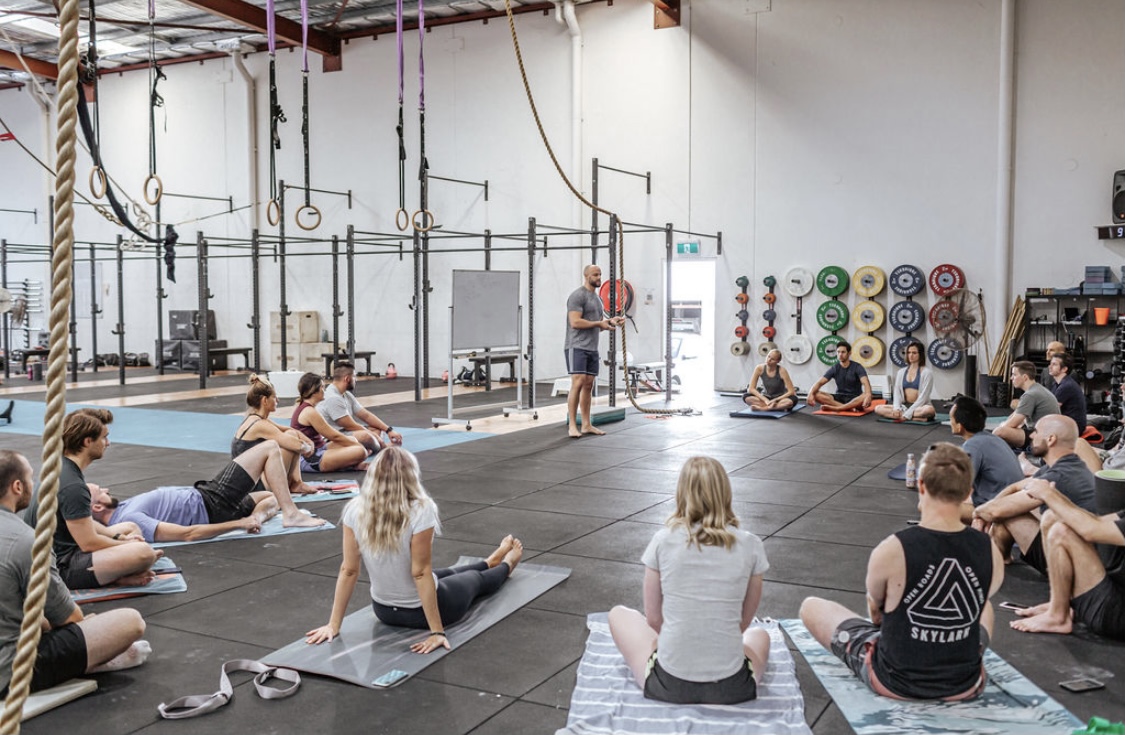
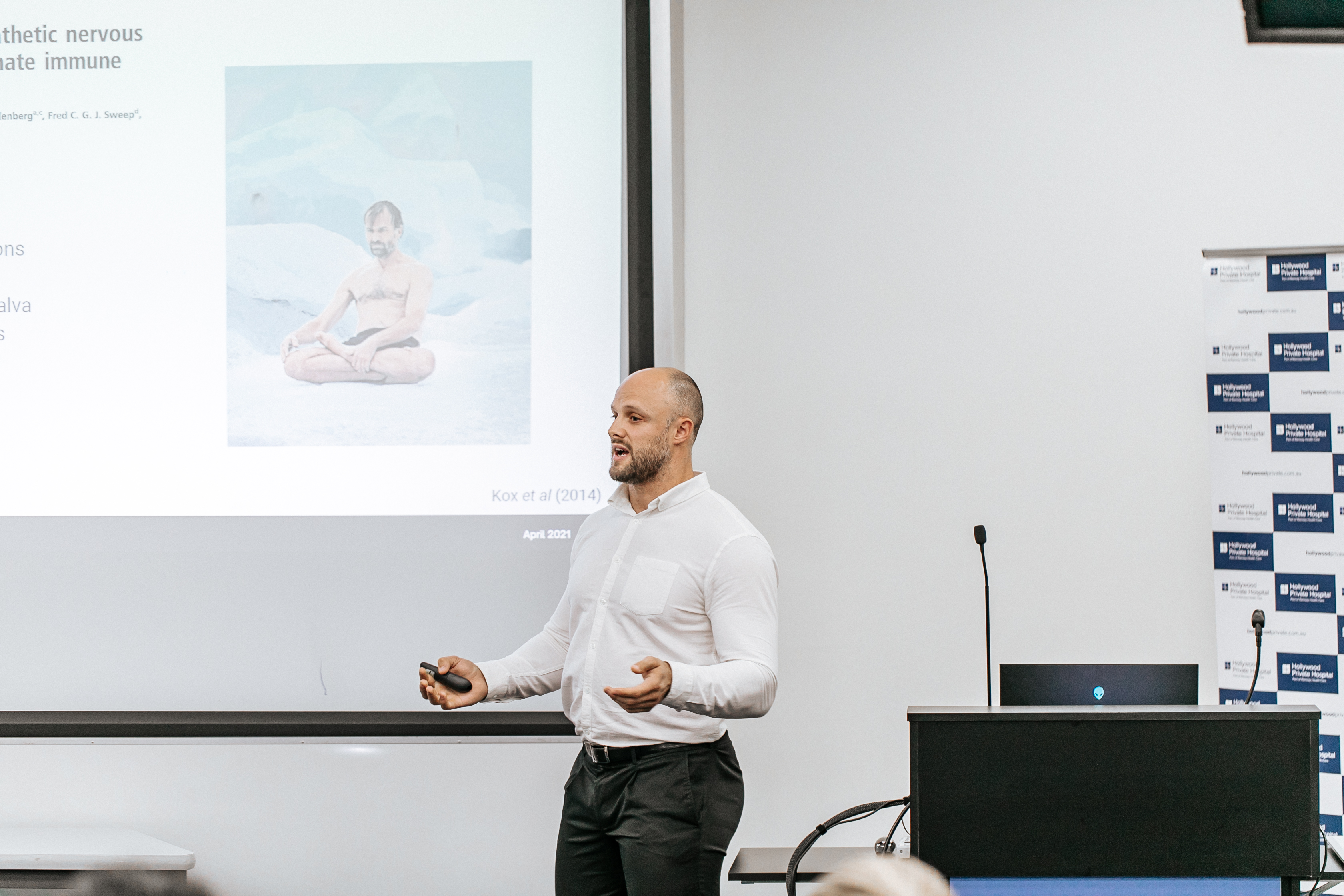
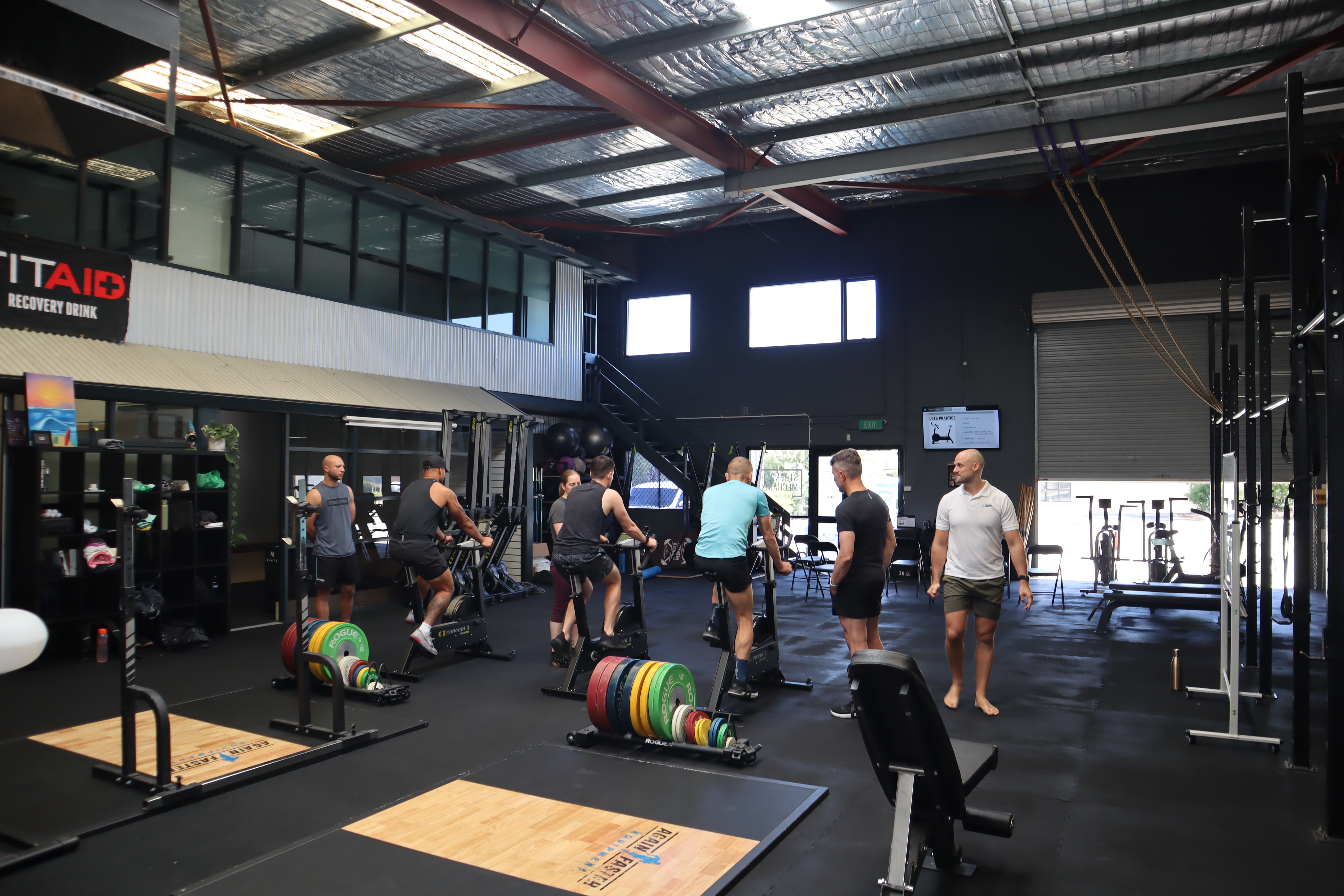
The live sessions follow the curriculum progressively and are designed to turn the online education into applied practitioner skill through practice, discussion, feedback and real-world reasoning.
The final live session integrates Resilience and Putting It All Together. Module 9 is then completed independently through the final examination and case study submission.
The goal is to develop a way of thinking. By the end of BRIT, you should be better able to assess where a client is now, decide what they need next, select an appropriate intervention and understand when and how to progress it.
Review the live training times, study commitment, enrolment options and everything included in the October intake.
View October cohort detailsOctober cohort begins 1 October 2026.
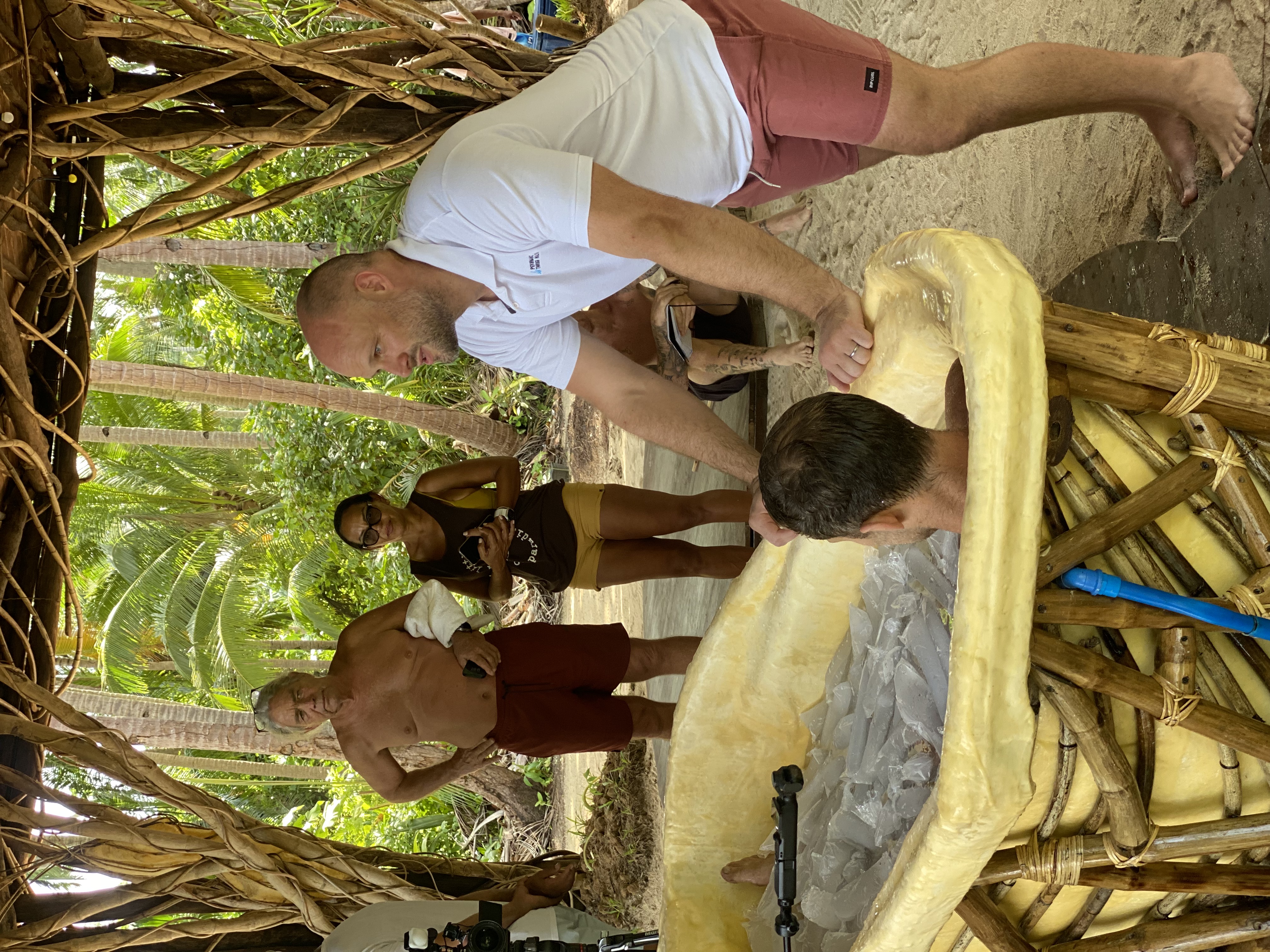
Training in practice

October 2026 cohort
Join the complete BRIT pathway, including the 12-week core training, live practitioner integration and six months of continued practitioner development.
Full investment
Includes the complete nine-module training, seven live integration sessions, final assessment and six months of continued practitioner development.
October cohort begins 1 October 2026.
Cohort numbers are limited to protect the quality of live practice, feedback and practitioner discussion.
We’ve answered the most common questions from practitioners considering this training.
BRIT is designed for coaches, therapists, health and wellbeing professionals, breathwork facilitators, movement practitioners and others who work directly with people and want a more structured approach to breath and nervous-system work.
It is particularly suited to professionals who want to move beyond individual techniques and learn how to assess client needs, establish appropriate foundations, develop regulation and progressively build resilience.
The framework can be integrated into 1:1 work, groups, therapeutic settings, health and wellbeing services, retreats and performance environments.
This training is introductory in method, but not introductory in responsibility.
No prior breathwork training is required. BRIT is designed for professionals who may be new to applying breath and nervous-system practices, but who already work with people and carry responsibility for their safety and wellbeing.
The emphasis is not on accumulating techniques. You will learn to think more carefully about assessment, sequencing, appropriate intervention, progression and restraint.
Professional maturity, curiosity and a willingness to engage thoughtfully with physiology, regulation and client context are more important than previous breathwork experience.
BRIT requires consistent engagement, reflection and applied practice across the 12-week training.
The programme combines structured online learning, seven live integration sessions, personal and practical application, and final assessment. To complete the training, participants are required to complete the final exam and submit an applied case study demonstrating understanding and responsible use of the framework.
Most participants should expect to dedicate approximately 3–5 hours per week to learning, practice and integration.
Safety is foundational to the BRIT framework.
The training emphasises assessment, appropriate starting points, gradual progression and recovery before challenge-based practices are introduced. Participants learn to recognise relevant limitations and contraindications, adapt practices to the individual, and understand when an intervention should be modified, avoided or referred on.
We also recommend that all practitioners working directly with clients maintain current CPR certification as part of good professional practice.
No. Cold exposure is presented as an optional, graded exposure tool, not a requirement of the training.
Participants learn how to assess readiness, introduce exposure progressively and apply it responsibly within appropriate scope. Where cold is not suitable, other forms of challenge or exposure can be used instead.
BRIT is not technique-driven.
Rather than teaching a collection of practices to apply in isolation, the training provides a structured framework for understanding when, why and for whom different interventions are appropriate.
The emphasis is on assessment, restoration, regulation, recovery and progressive resilience, with a strong focus on individualisation and real-world application rather than simply producing short-term state change or intensity.
Yes. Upon successful completion of the programme, you will receive a Breath Resilience Instructor Certificate from the School of Breath Science.
Certification requires completion of the full training pathway, including:
- Nine structured online modules
- Seven live integration sessions
- Final examination
- Applied case study submission
- Demonstration of appropriate understanding and application of the BRIT framework
This is not an attendance-based certificate.
Certification reflects completion of the training and demonstrated competency within the BRIT model, including assessment, progression, professional judgement and responsible application.
There is no application or approval process. If BRIT is the right fit for you, you can enrol directly.
After selecting the programme, you will:
- Review the available cohort times and complete payment.
- Receive an email to choose your preferred live cohort option.
- Sign the participant agreement and confirm your enrolment.
- Receive the Zoom links for your live integration sessions 24 hours before each session
- Activate your School of Breath Science account to access the BRIT course and practitioner development area.
You can begin working through the online material once your access has been activated.
All live integration sessions are recorded, so you can catch up if you are unable to attend live.
Replay access is available inside the School of Breath Science platform, where you can also review case discussions, practical application and session Q&A.
You can still complete the training and become certified if you miss a live session, provided you complete the required modules, final examination and case study submission.
Attending live will give you the greatest opportunity for interaction, feedback and practical integration, but the programme is designed with enough flexibility to accommodate different schedules and time zones.
The School of Breath Science provides professional education in breathing, physiology, nervous system regulation and resilience.
Our approach prioritises scientific understanding, psychological safety, individualisation and real-world application over rigid methods or the accumulation of techniques. The aim is to help professionals understand not only what they can do, but when, why and for whom an intervention may be appropriate.
The School was founded by Martin McPhilimey, a practitioner and educator with a background in respiratory science, physiology and applied nervous system work. His teaching focuses on developing the knowledge, judgement and professional responsibility required to work thoughtfully with breath and human physiology.
BRIT reflects this wider philosophy: assess before intervening, establish foundations before adding challenge, and build resilience progressively rather than chasing intensity or short-term state change.
Grounded in physiology and nervous system science
Emphasis on safety, sequencing, and professional judgement
Designed for real-world application, not ideal conditions

Copyrights 2026 | School of Breath Science | Terms & Conditions